


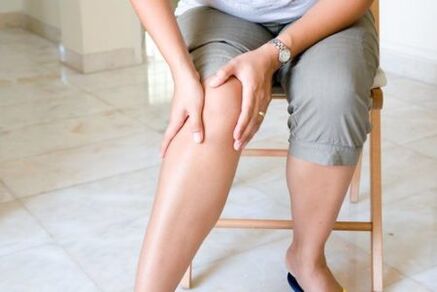
According to statistics, 30% of women and 10% of men suffer from varicose veins.This problem occurs more often among people aged 30-40 years.Places of manifestation of the disease: arms, shoulders, rectal wall, esophagus, bladder.As a rule, varicose veins most often make themselves felt on the legs, the symptoms of which are a serious aesthetic problem.
What are varicose veins on the legs
Varicose veins affect the subcutaneous and deep veins.The latter lose their elasticity and original shape, expand, protrude strongly and become tortuous.As a result, seals are formed - “spider veins”.What are varicose veins on the legs, why does it develop?
The real problem is related to the disruption of the direction of blood flow.The venous system of the legs consists of superficial, connecting and deep veins, in which there are special valves consisting of two valves that close and prevent the reverse movement of blood.When the superficial veins expand, the closure of the valves becomes loose.For this reason, blood is passed in the opposite direction, and a supply is formed in the superficial veins.
Then everything develops sequentially.Since there is more blood in the connecting veins, therefore, the load on them has increased, and they also begin to expand.Blood, which should completely go into the deep veins, seeps back into the superficial ones, thereby expanding them even more.As a result, noticeable bulging veins appear on the legs.
The consequence of the formation of reverse blood flow is a slowdown in blood movement, and this is a likely cause of thrombosis, which prevents the free flow of blood in the veins.
Varicose veins on the legs: symptoms and stages
Varicose veins on the legs are manifested by the following symptoms:
- pain in problem areas;
- leg cramps;
- burning inside the veins;
- swelling;
- pigmentation and compaction;
- purple or purple vein walls;
- trophic ulcers.
The first four symptoms are characteristic of the initial stage of varicose veins, and the subsequent ones are characteristic of the progressive form.
Varicose veins: causes of occurrence
Varicose veins of the lower extremities occur under the influence of a number of reasons:
- overweight;
- nervous disorders;
- smoking;
- drinking alcohol;
- excessive tanning;
- frequent visits to the sauna;
- abuse of hot baths;
- wearing tight socks, stockings.
Below we will take a closer look at other causes of varicose veins in the legs, identified by doctors.
- Genetic predisposition.If parents had varicose veins, then, most likely, their children will also develop this disease (probability - up to 75%).
- Nuances of work.Often the pathology in question is characteristic of people engaged in standing work.This position puts unnecessary pressure on your legs.People who work while sitting also suffer from varicose veins.We are talking about the so-called “computer varicose veins”.
- Hormonal imbalance.The disease makes itself felt in the fairer sex during puberty.The disease is often diagnosed in pregnant women and women with menopause.Hormonal imbalances can lead to blood stagnation.
- Age transformations.With age, the walls of venous vessels lose their elasticity and plasticity, the functionality of the valves is impaired, and this can lead to venous stagnation and subsequent dilation of the veins.
Traditional methods of treating varicose veins
An effective treatment strategy requires an integrated approach.Drug procedures are complemented by auxiliary therapy.Traditional methods have proven themselves well (especially in the initial stages).
- One of the most effective folk remedies is crushed garlic (with white peel) and butter (ratio - 1:2).Problem areas are rubbed with the mixture, and the legs are wrapped in parchment paper on top (you can use a bandage or scarf).In the morning, the mixture is washed off and something warm is put on your feet.
- In summer, slices of green tomatoes are tied to diseased veins overnight, and in winter, tomato paste is tied.Lycopene, contained in tomatoes, protects the walls of blood vessels from overheating, increases their elasticity, and reduces blood pressure.
- Kalanchoe will help ease the course of the disease.The product is prepared in a liter jar, into which 1/2 is filled with leaves, and then alcohol (70%) is poured in.The medicine is infused for two weeks.It is advisable to shake the solution daily.The resulting infusion is used to lubricate the legs and feet before going to bed.The product relieves pain well.
- Fresh potatoes can also relieve pain.Grate several potatoes and apply the paste to your feet for about 4 hours.
- An ointment is made from dandelion root.The root is dried and crushed.The resulting powder is poured with water and boiled until thick.Then pork fat is added.You should get a creamy mass.The ointment should be stored in the refrigerator.
In addition to external use, there are recipes for decoctions that improve blood circulation.
Prevention of varicose veins on the legs
Compliance with preventive measures will help avoid the development and further progression of the disease.Experts recommend the following:
- At the first symptoms of varicose veins on the legs, you need to consult a specialist who will recommend blood thinning medications.
- For mild pain, it is necessary to elevate your feet.While lying down or sitting, place a pillow under your feet.It is also good to do the exercise in compression stockings.
- A good preventive measure is a cool shower.Low temperature is good for blood circulation; it hardens blood vessels.Therefore, it is highly recommended to massage your feet with a cold shower, especially if you have massage attachments.Hot baths, prolonged tanning, and depilation with hot wax are prohibited - these are factors that contribute to the development of the disease.
- Baths with infusions of calendula, St. John's wort, horsetail or horse chestnut are useful.Even sea or regular salt will do.The duration of the procedure is half an hour.
- If you have a sedentary job, then do not forget to do a simple exercise.Crossing your legs, rotate your upper foot clockwise.So 15 rotations of each foot.
- The right solution would be to perform exercises with raising your toes.Stand on your heels and, holding your hand against the wall, make smooth rolls onto your toes.Do this a couple of dozen times.In principle, any physical activity, even a regular walk, will improve blood circulation.
- Increase the proportion of foods rich in vitamin E in your diet. These are egg yolk, wheat, beans, cabbage, dill.The venous system also needs vitamin P. Therefore, it is necessary to consume more foods that contain it: peanuts, walnuts, green tea, citrus fruits.
Besides all this, remember the basic rules:
- eat less fatty foods;
- do not cross one leg over the other;
- Avoid tights with tight elastic bands or tight socks, uncomfortable shoes and too high heels.
Treatment of varicose veins is not an easy process.If you are at risk, then carry out prevention in advance.
Knowing the causes of varicose veins in the legs and having discovered the first symptoms, take care of its elimination and consult a doctor.
A healthy diet, following medical recommendations, and folk recipes will help relieve pain, stop the development of the disease, and get rid of its manifestations.